

FUNCTIONAL PROGRAMMING SERVICES
Functional programming for software reliability
We apply functional programming to the parts of your system where strong types, immutability and explicit state handling improve reliability and maintainability.
- Immutability and pure functions that remove whole classes of state bugs
- Strong types so the compiler finds what a change breaks
- A functional core inside your existing stack, not a wholesale rewrite
Functional programming is not academic taste. It buys concrete properties.
Four engineering properties you can inspect, not a coding style. A functional core reinforces AI-Native Software Engineering with a stronger correctness baseline and gives Quality Engineering a smaller defect surface to test against. Correctness by construction, not correctness by testing everything twice. The type system carries your invariants so errors fail at compile time, not in production.
Fewer runtime surprises
Immutability and pure functions eliminate whole classes of concurrency and state bugs before they can exist. Bugs that cannot compile never reach production.
Refactoring without fear
Strong types mean the compiler finds what a change breaks, so large refactors stop being terrifying. The type checker is your regression suite.
Predictable concurrency
No shared mutable state means parallelism without the usual race-condition minefield. Parallel by default, safe by construction.
Living documentation
Types describe intent precisely, so the code explains itself to the next engineer. The signature is the specification.
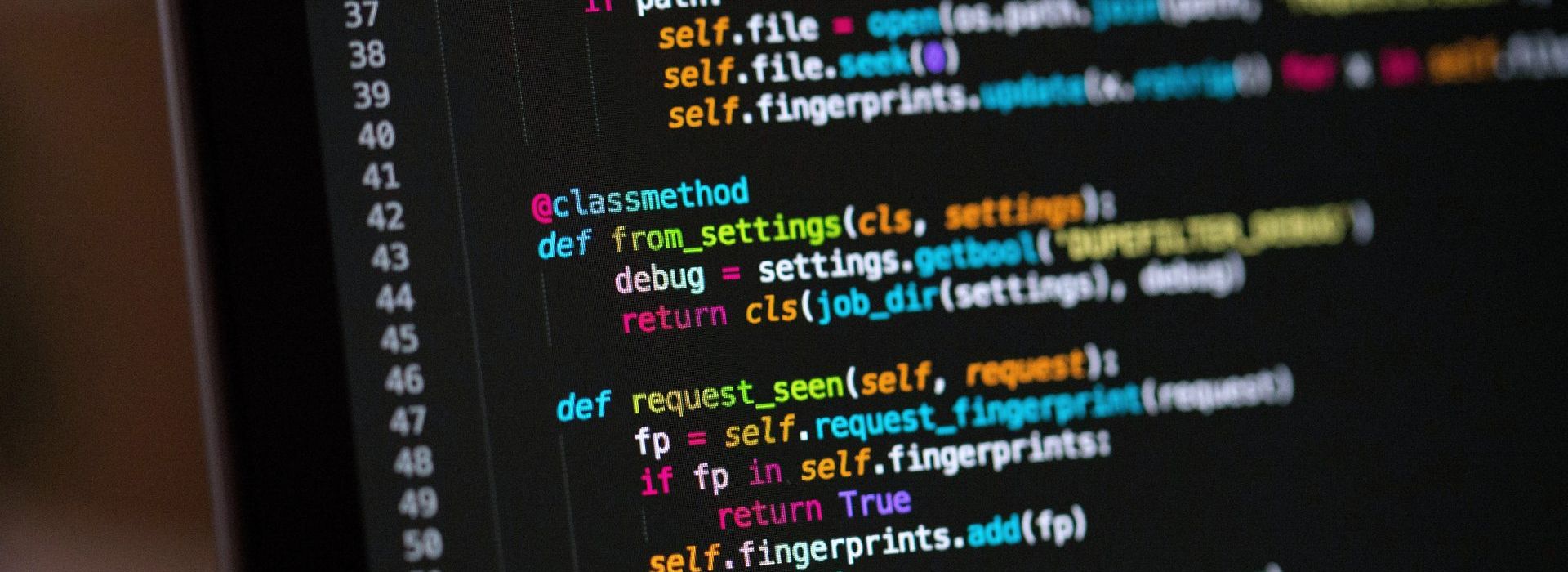
Make illegal states unrepresentable, and a whole category of bugs simply cannot exist.
Functional programming is a sharp tool, not a religion.
We are honest about scope. The best outcome is often a functional core inside a mainstream stack, not a full rewrite.
We design for the boundary that gives you the safety where it pays and the familiarity everywhere else.
Apply functional programming where it pays off.
Find the correctness-critical core
We identify where a bug is genuinely costly, and where pragmatism is fine.
Model the domain in types
Make illegal states unrepresentable so errors fail at compile time, not in production.
Isolate side effects
Keep the impure edges thin and testable, the core pure and provable.
Prove with property-based tests
Test the laws your system must obey, not just a handful of examples.
Enable the team
Pairing and review so your engineers can extend the functional code confidently after we leave.
We meet your platform where it is.
A functional service can live happily inside an otherwise conventional estate, deployed through your standard DevSecOps pipeline.
Where a functional core pays off next.
AI-Native Software Engineering
A stronger correctness baseline for the way we build software end to end.
Quality Engineering
A smaller defect surface to test, so shift-left testing does more with less.
DevSecOps
The secure pipeline a functional service ships through, gates and all.
Dedicated Delivery Pod
Experienced functional engineers, staffed to deliver and enable in one pod.
Cloud and Platform Engineering
The parent practice this correctness discipline rolls up to.
What engineering leaders ask us first.
No. We usually build a functional core for the correctness-critical logic inside your existing stack, not a full rewrite.
It is a smaller talent pool, which is why we pair enablement with delivery and can staff experienced engineers through our teams.
Upfront modelling costs a little more. It pays back quickly in fewer production incidents and far cheaper refactoring.
Find the parts of your estate where correctness pays, and use types and tests to catch errors earlier.
A functional core, typed invariants, and property-based proof, inside the stack you already run.