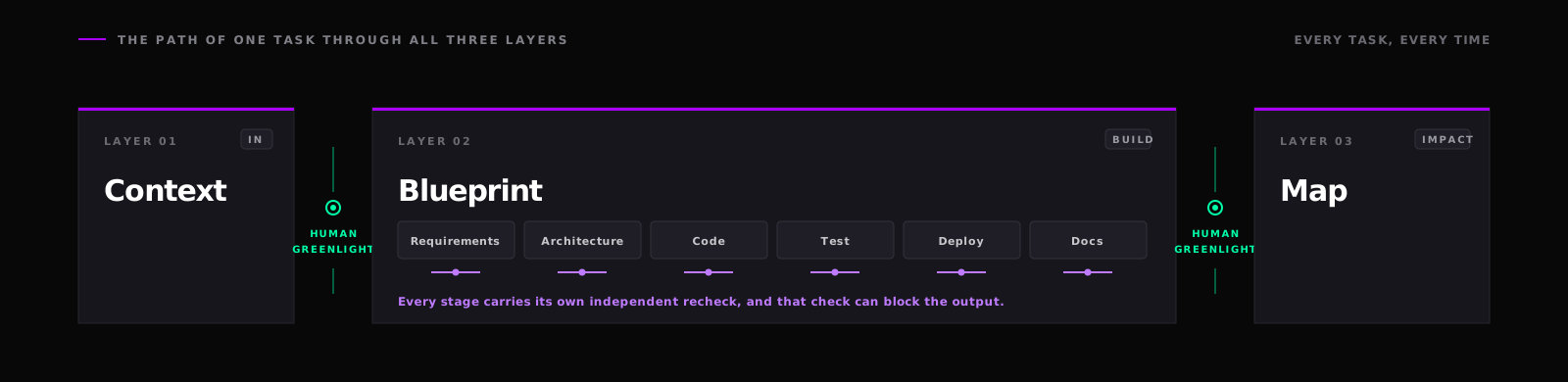
Every task runs the same governed path.
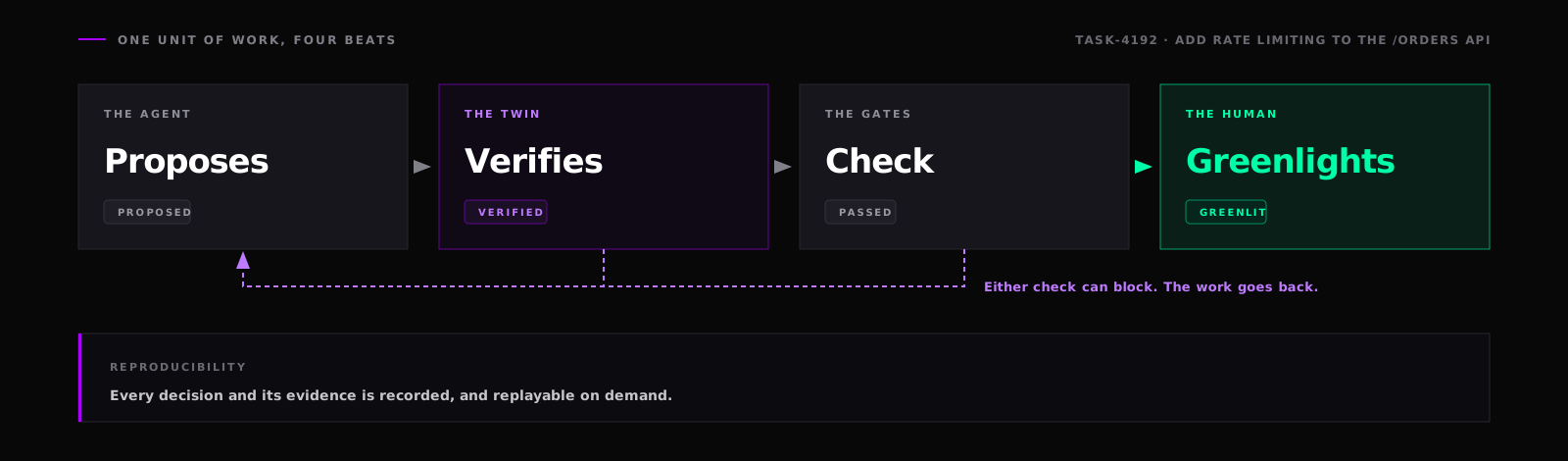
Add rate limiting to the /orders API
Agent proposes
The stage agent drafts the change from verified context.
Twin verifies
An independent twin rechecks it and can block.
Automated gates
Automated checks test the change against agreed correctness, security and regression criteria.
Human greenlights
An engineer owns the go / no-go before anything is trusted.
Every decision and its evidence is recorded, and replayable on demand.
Every decision and its evidence is recorded, and replayable on demand.

Speed without control isn't an advantage. It's exposure.
Everyone in this market says "governance." Greenlight makes it a mechanism you can point to.
Scroll the diagram sideways to follow all four beats.
An agent proposes the change for its stage of the lifecycle.
An independent twin, running on a different model family, verifies it against the requirement and the existing code.
Automated checks test correctness, security and regressions against the agreed requirements and test coverage.
Then a human greenlights it before it's trusted.
Written down, referenced in an audit, applied by whoever remembers it.
The intent is real. The enforcement depends on individual diligence at the moment of the merge.
The AI does the volume. The verification is independent. The final call stays with your engineers.
Every decision is replayable if an auditor ever asks why.
For every unit of work the loop is the same. Propose, verify, greenlight, at every stage of the lifecycle, not just at the pull request. Reproducibility: every decision is logged and replayable. If a client or an auditor asks why a decision was made, the answer is reconstructable rather than remembered.
Five things you can hold us to.
Nothing unverified reaches production.
Every change clears an independent recheck, automated gates, and a human sign-off before it's trusted. Your engineers retain the approval decision.
The economics are honest about their own timeline.
On day one the story is speed: agents run in parallel and failed attempts get caught early. Over time the story is cost, as the platform gets more efficient at how work runs and cost-per-delivered-task bends down. The calculator lets you test it against your own numbers.
lower cost per task versus an unmanaged frontier tool (internal modelling).
Every efficiency is reflected in your delivery economics.
You bring your own tokens: inference runs on your accounts under your terms. We license the platform, not the usage, so we have no incentive to keep your consumption high. Every model call runs through one governed gateway, so spend is controlled and visible, with no shadow AI and no scattered subscriptions.
Knowledge stops leaving with people.
Requirements, decisions, diffs, and test results live in one versioned memory, not in someone's head or a closed chat. A new engineer can use that history during onboarding instead of reconstructing earlier decisions.
You govern the tools you already have.
Greenlight works alongside GitHub Copilot and Cursor. It doesn't replace them. It puts verification and sign-off around the tools your team already reaches for.
Start small and measured.
Softobiz configures Greenlight - Engineer to your standards and runs it as a managed engine, so you get the output and the governance without building or operating the platform yourself.
Configure to your standards
Your architecture principles, security rules and conventions become the standards the system enforces.
Point it at one real engagement
Greenfield first, where value proves fastest.
Keep the human greenlight
At every gate. That is what makes the speed safe to keep.
Compare against your own baseline
Not our benchmark. Yours, measured before and after.
Cycle timeEscaped defectsCost per delivered task
Governed acceleration first, then autonomy, never the reverse. Earn trust and results with the human greenlight in place, and extend autonomy only where the evidence supports it.