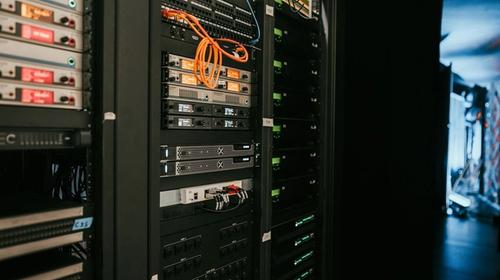
Cloud infrastructure for enterprise AI
Why AI changes the cloud architecture
Enterprise AI depends on cloud services for data access, model execution, integration and observability. That relationship changes the architecture: teams must manage variable compute demand, sensitive data, model risk and unit economics as one operating system rather than as separate cloud and AI programmes.
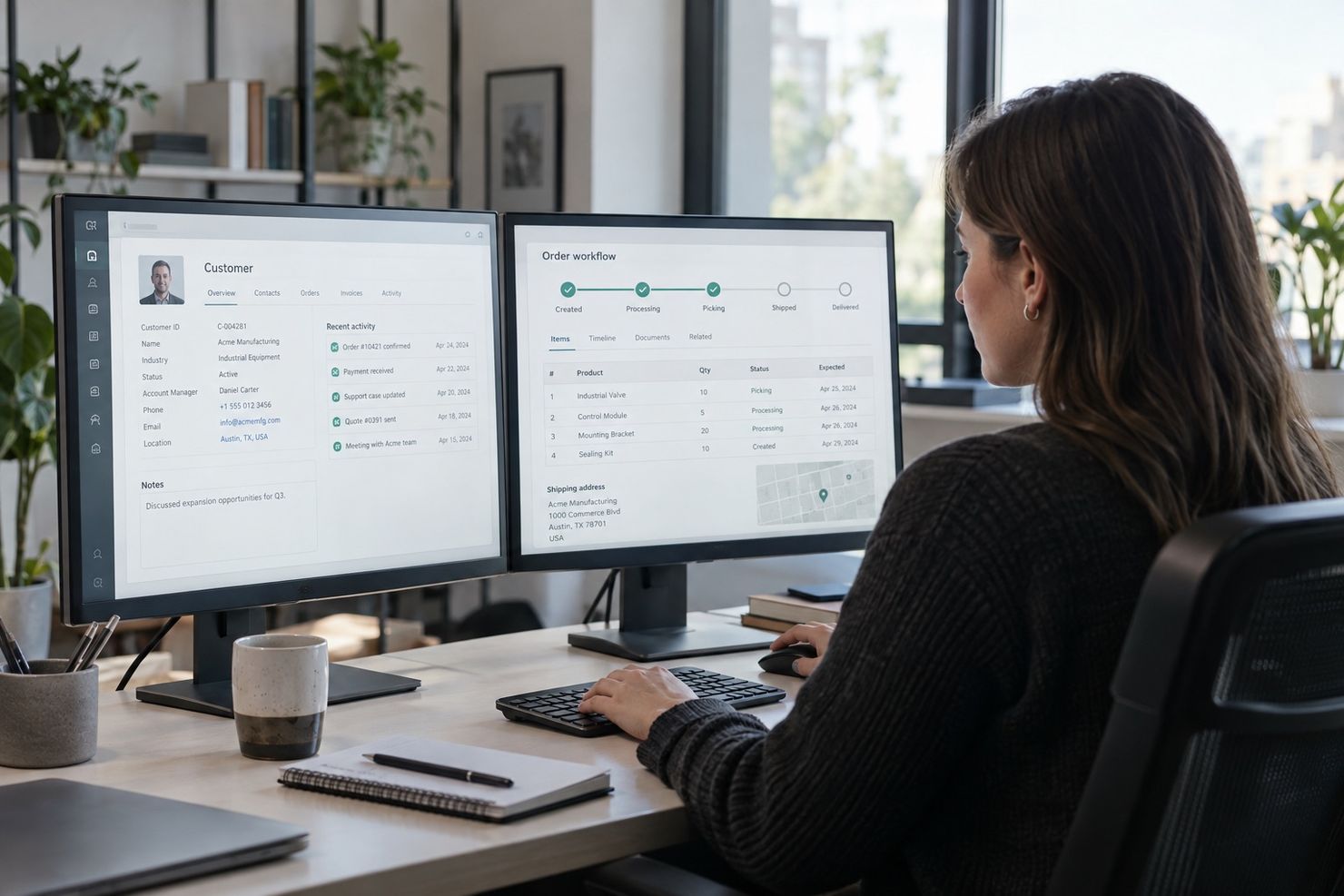
How AI changes cloud operations
AI can support cloud operations, while cloud platforms provide the services required to run AI in production. The following patterns show where the two disciplines meet.
1. Automating cloud management tasks
Automation can support resource provisioning, capacity planning and performance monitoring. Teams still need policies for spend, reliability and approval so an automated action remains traceable.
2. Strengthening security operations
Models can help security teams prioritise signals across high-volume event streams. Detection quality, escalation thresholds and evidence retention matter more than the presence of an AI feature.
3. Supporting personalised services
Cloud data and decision services can support recommendations and next-best actions across channels. Consent, latency, catalogue quality and measurement need to be designed into the workflow.
4. Managing unit economics
AI workloads introduce costs that vary by model, token volume, data movement and service level. FinOps practices should make cost per task visible and enforce budgets before usage scales.
5. Creating reusable platform services
A shared platform can provide approved models, retrieval, evaluation, identity and monitoring once, then let product teams compose them for specific workflows. Reuse reduces duplicated engineering and inconsistent controls.
What a coherent AI-cloud foundation enables
The foundation creates value when it improves a measurable operating outcome. Four areas commonly shape the business case:
1. Governed data access
Shared data products, access policies and lineage give AI services reliable context while keeping sensitive information within defined boundaries.
2. Cost control
Rightsizing, routing and caching can reduce avoidable spend. Savings depend on workload design and need to be measured against an agreed baseline.
3. Decision support
Predictive and generative services can bring evidence into operational decisions. Thresholds and human review should reflect the consequence of a wrong answer.
4. Operational reliability
Anomaly detection can help teams identify unusual behaviour earlier. Production reliability still depends on observability, tested recovery paths and accountable incident response.
Challenges when AI and cloud converge
While the benefits are compelling, there are challenges:
1. Security risk
AI expands the attack surface across data, prompts, models, tools and integrations. Threat modelling should cover the whole workflow, including what the system can access and change.
2. Bias and model behaviour
Training data and evaluation design can reproduce harmful assumptions. Teams need representative test sets, documented limits and a route for affected users to challenge an outcome.
3. Workforce impact
Automation changes tasks, hand-offs and accountability. Workforce planning should identify which work changes, what judgement remains with people and which new operating skills are required.
4. Transparency and accountability
Every production workflow needs a record of the model, data context, action, exception and approver. Explainability should be proportionate to the decision and useful to the person responsible for it.
How to assess cloud platform support
Platform selection should be based on the capabilities and controls the operating model requires:
- Model and data controls: identity, isolation, encryption, residency and policy enforcement across the workflow.
- Portability: clear interfaces that reduce dependence on one model or proprietary workflow.
- Operational evidence: logs, evaluations, cost data and service measures that teams can review.
- Delivery support: mature tooling, documentation and engineering practices for moving from experiment to production.
The long-term operating direction
The durable direction is towards AI capabilities embedded in standard platform services, governed through the same engineering system as applications and data. Three developments deserve attention:
1. More capable language interfaces
Language interfaces can reduce the work required to search, summarise and act across enterprise systems. Their value depends on retrieval quality, permissions and the ability to verify an answer.
2. Security integrated with the AI stack
Security teams will need consistent policy and telemetry across models, agents, data services and the applications that call them.
3. Domain-specific workflows
Regulated industries will increasingly use domain-specific workflows with explicit evidence, escalation and professional oversight rather than relying on a general-purpose model alone.
Enterprise expectations and hybrid cloud strategy
Hybrid and multi-cloud strategies can address residency, resilience and existing platform commitments. They also increase integration and operating complexity, so every additional environment needs a clear reason and owner.
The same principle applies across organisation sizes: choose the minimum architecture that meets the workflow, risk and scale requirements, then add complexity only when evidence supports it.
Build one operating model for AI and cloud
AI and cloud decisions now shape each other. Treating them as one governed platform creates clearer ownership of data, reliability, security and cost.
Start with the business workflow and its controls. The platform should make the safe path repeatable, give product teams room to deliver and show leaders what each AI-enabled service costs and achieves.