

GREENLIGHT · AI VELOCITY, HUMAN GREENLIGHT
Governed enterprise AI with Greenlight
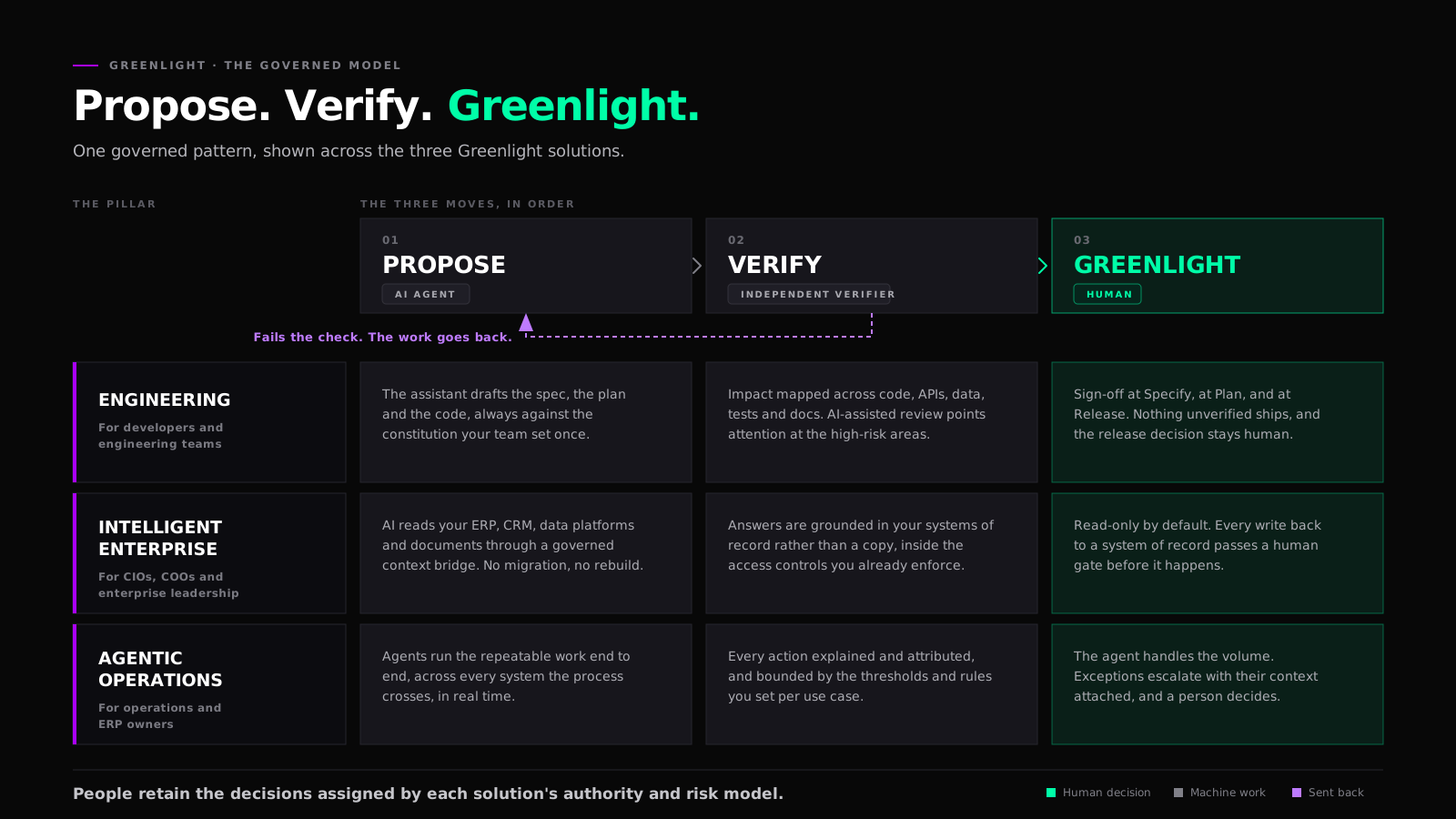
Greenlight is how we put AI to work across your enterprise, safely. One principle holds everywhere: nothing is trusted on assertion. Work is proposed and independently verified, while named owners define what can proceed and what requires human approval.
Adopting AI is easy. Trusting the output is not.
AI tools and pilots are already present in many enterprises. What is often missing is a way to say, with confidence, what the AI actually did and whether someone accountable checked it before it mattered.
So initiatives stall in the gap between a promising demo and something the business is willing to depend on. Usually not because the technology underdelivered, but because nobody can point to the step where a person took responsibility for the output. Governance gets written as policy, then lives in a document nobody reads while the work happens somewhere else.
Speed you cannot account for is not speed. It is risk you have not priced yet.

Most AI governance is a document somebody wrote. Greenlight puts the control path inside the work.
Nothing is trusted on assertion.
Most companies talk about governing AI. Greenlight builds independent verification and explicit authority into the work itself, so governance is a mechanism you can point to rather than a policy you hope people follow.
A specialised agent does the work and puts up a result, at every stage where AI can carry the load.
An independent verifier tests that result against the standard it has to meet, before anyone acts on it.
A named owner defines the authority boundary and decides wherever approval or escalation is required.
What a greenlight actually involves.
A control decision is only useful if it is informed, attributable and recorded. Three things make a greenlight part of the operating model rather than a formality.
Every output is tied to what produced it, the inputs it drew on, and when. Nothing arrives anonymously for an accountable owner to accept on trust.
Verification is done by something other than the thing that produced the work, against the standard that output has to meet.
Sign-off sits with someone who has the context to judge it and the standing to refuse it. Their decision is part of the record, not a checkbox beside it.
Cut by who you are, not by product.
The same discipline sits underneath each solution, applied where the work runs. Start with the one that matches the accountable team.

Governed AI software delivery
For developers and engineering teams.
- Your lifecycle runs with AI and independent verification. People formally approve the specification, technical plan and release, with extra review triggered by risk.
- It works alongside the AI coding tools your team already uses, governing them rather than replacing them.

Additive AI, without the rebuild
For CIOs, CTOs, and enterprise leadership.
- AI added to the systems, data, and workflows you already run, governed throughout, so adoption scales past stalled pilots.
- Enable what is slow, bridge what is disconnected, embed where a process should run itself, without losing control of risk or cost.

Governed agents in live operations
For operations and ERP owners.
- Agents coordinate across your systems in real time, including ERP, so people stop being the middleware between them.
- Every action stays explainable, auditable, and under a human greenlight where it matters.
Start where the pain is, not where the org chart is.
An organisation may use more than one solution over time. Start with the single accountable workflow where the outcome and risk boundary are clearest.
The same propose, verify and govern discipline runs in every solution. Adding a second solution later does not mean learning a second control model or redefining who holds authority.
Every solution is designed to work with the platforms, data and tooling you already run. None opens with a migration or assumes you will replace something that works.
What was produced, what checked it, and which authority allowed it to proceed is captured as the work happens. When an auditor, a regulator, or your own board asks, the answer is retrieved rather than reconstructed.
Prove it on real work before it becomes a programme.
We do not open with a platform rollout. We start with one process that genuinely matters, run it the governed way, and let the evidence decide how far it goes.
Pick the work
One real process, a clear owner, and an outcome you can measure. Ambition comes later. Something you can judge comes first.
Run it governed
AI carries the load, an independent verifier tests the output, and a person clears it where the agreed authority model requires. The full discipline starts on a small surface.
Read the evidence
You see what was produced, what the check caught, and what it cost, measured against how that same work ran before we touched it.
Extend deliberately
Where the evidence holds, the pattern extends to adjacent work. Where it does not, you have spent weeks finding out rather than quarters.
The sequencing is deliberate: trust is earned on work you can already judge, then extended. A solution that cannot show its evidence on one process has not earned the right to run ten.
Agree what better looks like before you scale.
We agree a baseline, an evaluation period and an accountable owner for the workflow. The measures reflect the work each Greenlight layer supports.
See the offers, filtered to your situation.
Fixed-scope engagements across AI, data, cloud and automation, filterable by capability, industry and partner.
Before you choose a Greenlight solution.
Both, and the order matters. The governance model is the substance: work is proposed, independently verified and governed by an explicit authority model. The tooling makes that model hold under real delivery pressure rather than depending on individual diligence. You are buying the discipline and the software that records and enforces it.
No. Start with one solution, aimed at one process with a clear owner and a measurable outcome. The solutions share a single governance model, so adding a second later does not require a new control model.
No. Greenlight governs them. Your teams keep the assistants and platforms they are already productive in, and those tools operate inside a path where outputs are checked and authority is explicit. Replacing tooling people like is a good way to lose the adoption you are trying to govern.
The review is targeted at what needs judgement because the independent verifier has already tested the output against the standard it must meet. Applied Engineering has formal approval at specification, technical plan and release, with additional checks sized to risk. Operational authority and escalation are defined per workflow.
What was produced, what checked it, and which authority allowed it to proceed is captured as the work happens rather than reconstructed afterwards. That means the answer to a governance question is retrieved, not remembered. Alignment to your specific regulatory context is scoped per engagement.
Less than most people expect. We do not require a completed data platform, a finished AI strategy, or a migration. We need one real process, someone who owns it, and agreement on what a good outcome looks like. The first engagement is deliberately small enough to judge honestly.

See which solution fits.
Tell us where you sit and what is slowing you down. We will identify the solution that fits the first accountable workflow and show how its controls work in practice.